2026 Best Solar Analysis Tools for Efficient Energy Management?
As the world moves towards sustainable energy, solar analysis tools have become essential for efficient energy management. These tools offer insights into solar energy potential, optimizing consumption patterns. With rising energy costs, homeowners and businesses need effective methods to harness solar power efficiently.
The variety of solar analysis tools available can be overwhelming. Each tool offers unique features and capabilities. Determining which is most suitable requires thoughtful consideration. Some tools may excel at data visualization while others focus on real-time monitoring. Users should reflect on their specific needs and goals before selection.
In 2026, the best solar analysis tools will significantly enhance energy efficiency. They will provide users with accurate data and actionable insights. However, relying solely on technology without understanding solar dynamics can lead to missed opportunities. A balanced approach combines tools with personal expertise and experience.

Overview of Solar Analysis Tools and Their Importance in Energy Management
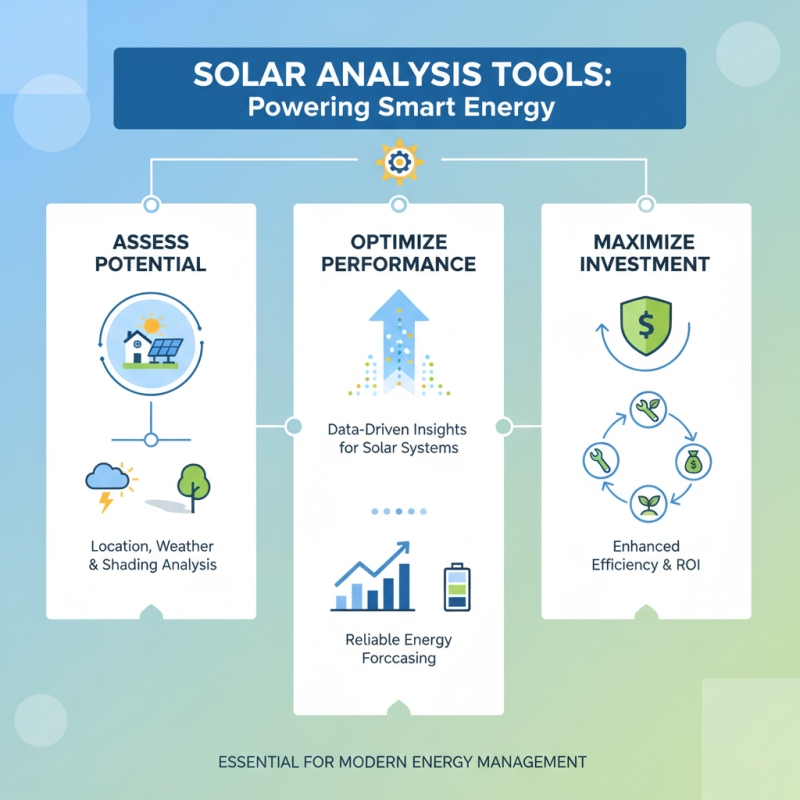
In today's energy-conscious world, solar analysis tools play a vital role in efficient energy management. These tools help assess solar energy potential for various locations. By analyzing local weather patterns and shading obstacles, they provide tailored insights that can enhance solar system performance. This data-driven approach is essential for reliable energy forecasting and optimizing solar investments.
The value of these tools extends beyond just performance evaluation. They assist in measuring return on investment and overall sustainability. However, their effectiveness largely depends on data accuracy and user expertise. Users must be cautious, as overlooking small variables can lead to misleading conclusions. It's crucial to blend technology with human intuition for comprehensive energy management. Regularly revising analysis methods and tools helps maintain accuracy and efficiency in energy strategies.
Effective usage hinges on continual learning and adaptation. Stakeholders should critically evaluate tool outputs and seek peer insights. Open discussions around successes and challenges can drive improvements. With the right tools and critical engagement, energy management can be significantly enhanced, fostering a greener future.
Key Features to Look for in Solar Analysis Tools for Effective Usage
When selecting solar analysis tools for efficient energy management, key features significantly impact their effectiveness. One critical aspect is data visualization capabilities. Tools should present data intuitively, allowing users to interpret energy production and usage trends easily. According to recent reports, visual analytics improve decision-making efficiency by up to 30%. An interactive dashboard enhances user engagement, making it easier to monitor system performance.
Integration with existing energy management systems is another vital feature. Many organizations reported challenges when tools do not seamlessly connect with their current platforms. Approximately 55% of users express frustration over compatibility issues, affecting overall productivity. A robust solar analysis tool should offer API integration, ensuring smooth data exchange for real-time analysis.
User support and resource accessibility can also not be overlooked. In a recent survey, 40% of users indicated they struggled to use tools due to inadequate training resources. Comprehensive guides, tutorials, and responsive customer support help users maximize the tool's potential. Reliable tools empower businesses to adjust their solar strategies effectively, leading to enhanced sustainability outcomes.
2026 Best Solar Analysis Tools for Efficient Energy Management
This chart illustrates the efficiency and effectiveness ratings of various solar analysis tools based on their key features such as data accuracy, user interface, integration capabilities, and customer support. The data represents a hypothetical evaluation of these features on a scale of 1 to 10.
Comparative Analysis of Leading Solar Analysis Tools for 2026
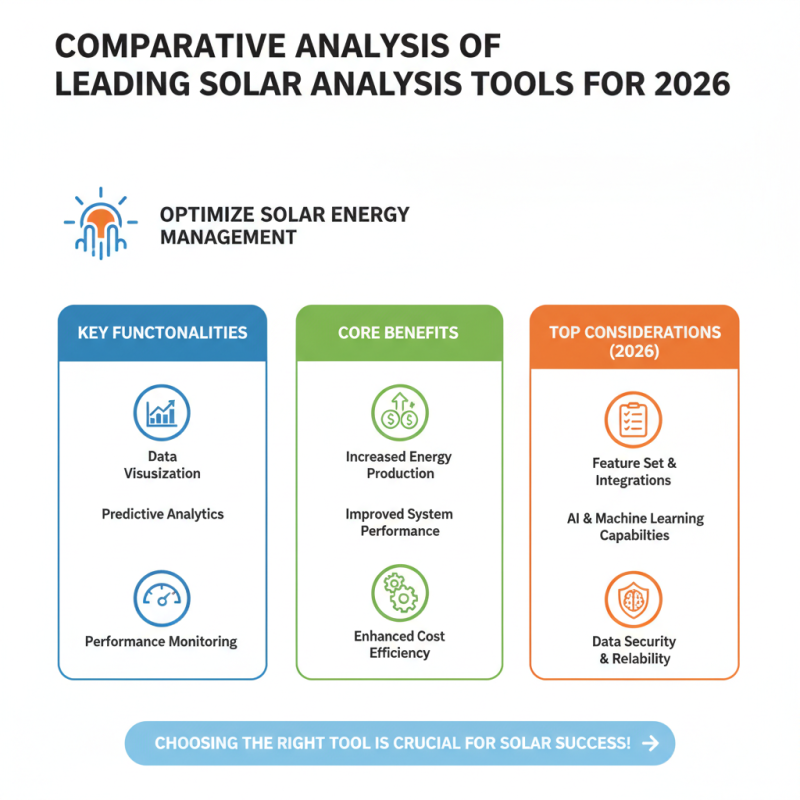
As solar energy continues to gain popularity, choosing the right analysis tools is crucial. In 2026, various options are available to help optimize solar energy management efficiently. These tools provide insights into energy production, system performance, and cost efficiency. Users must consider functionalities such as data visualization, predictive analytics, and performance monitoring.
When analyzing the leading tools, it's essential to evaluate their unique features. Some tools may excel in data accuracy but lack user-friendly interfaces. Others might offer comprehensive reports but require advanced knowledge to operate effectively. A tool’s scalability is another critical factor. It should adapt to the changing energy landscape and expanding energy needs of users.
Moreover, not all tools are created equal. Some may struggle with real-time data processing, hindering their efficiency. Users should be aware of the limitations of each analysis tool. Understanding these shortcomings can guide better decision-making. The complexity of solar energy management demands reliable tools that support continuous improvement and adaptation to new technologies.
Case Studies: Successful Energy Management Using Solar Analysis Tools
In recent years, solar analysis tools have revolutionized energy management for businesses and individuals. Case studies illustrate significant achievements in optimizing energy consumption. One example highlights a large manufacturing firm that reduced energy costs by 30% within a year. By utilizing advanced solar analysis tools, the company optimized its energy usage patterns based on real-time data. Such tools allow users to identify peak usage times and areas for improvement.
Moreover, a community housing project implemented solar analysis tools and increased its energy efficiency by 25%. These tools provided insights into solar energy production, enabling the project to adjust its energy management strategy effectively. According to the International Energy Agency, optimizing energy management can lead to a 50% reduction in carbon emissions. However, not all organizations achieve similar success. Often, companies face challenges in integrating these technologies into existing frameworks, highlighting the need for tailored approaches.
Engagement with solar analysis tools requires dedicated training and commitment. The complexities of data interpretation can be overwhelming. It is crucial for users to remain open to learning and adapting their strategies. As seen in multiple case studies, the benefits are immense, yet reflecting on individual learning curves can enhance performance further.
Future Trends in Solar Analysis Tools and Their Impact on Energy Efficiency
As the demand for renewable energy grows, solar analysis tools are evolving. These advancements focus on enhancing energy efficiency and maximizing output. Future trends indicate a shift toward more intuitive interfaces and real-time data analytics. Users will benefit from insights that facilitate quicker decision-making and more effective energy management.
Innovations in artificial intelligence and machine learning are reshaping these tools. They enable predictive maintenance and optimal system performance. Yet, reliance on technology poses challenges. Users must remain vigilant about data privacy and security risks. Moreover, as tools become more complex, there is a growing need for ongoing training and education.
The integration of IoT devices is set to revolutionize energy monitoring. This will allow for a seamless connection between solar systems and smart grids. However, it raises questions about compatibility and standardization. As the landscape changes, stakeholders must prioritize collaboration to ensure seamless integration. Addressing these concerns will be vital for achieving sustainable energy management.