How to Calculate Solar Costs for Your Home Savings?
Calculating solar costs for your home can seem daunting. Many homeowners find it challenging to grasp the financial implications of installing solar panels. Understanding the various factors involved is key to successful budgeting.
Solar costs encompass equipment, installation, and maintenance expenses. The price of solar panels has decreased significantly over the years. Yet, hidden costs often catch people off guard. For instance, permit fees or structural upgrades may not be obvious initially.
Homeowners must reflect on their specific energy needs. Are you planning for future expansion? Or do you want to maximize savings now? Each decision can impact your overall solar costs. While solar energy offers long-term savings, upfront expenses can be considerable. An informed approach can create a clearer financial picture.
Understanding Solar Energy Basics and Home Savings Potential
Solar energy offers significant savings potential for homeowners. Understanding its basics can unlock many benefits. Installing solar panels can reduce monthly utility bills effectively. The sun provides free energy once you set up the system. Costs may vary based on your location and energy needs. This means not every installation will yield the same savings.
Evaluating your home's energy consumption is crucial. Take time to analyze your current usage. You might discover areas where you waste energy. Paying attention to this can lead to smarter solar investments. Moreover, pricing structures for solar systems can be complex. This can lead to misunderstandings about long-term savings. Ask questions, and don't hesitate to seek clarity.
The upfront investment can seem daunting. It’s essential to weigh initial costs against future savings. Many homeowners underestimate this aspect. In some cases, local incentives can help reduce the financial burden. Make sure to research financing options as well. They can significantly change your budget outlook over the years. Solar energy adoption has potential pitfalls, but diligence and research can pave the way for substantial savings.
Evaluating Initial Costs: Solar Panels, Installation, and Equipment
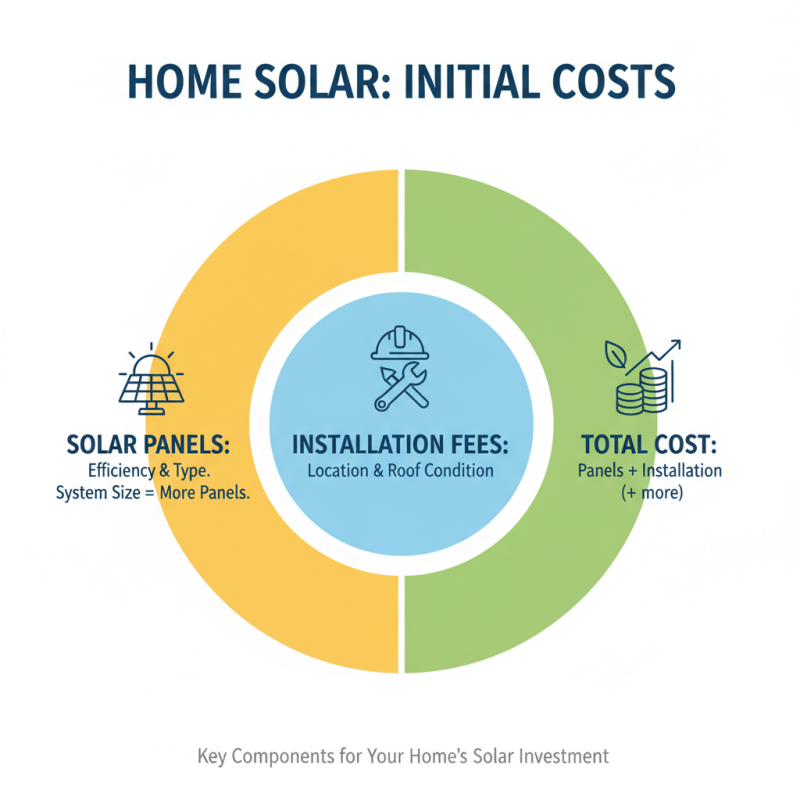
When evaluating initial solar costs for your home, consider a few key components. Solar panels are the most visible part of the system. Their price varies based on efficiency and type. Larger systems require more panels, impacting the total cost. Installation fees can also add to your budget. These costs can change based on your location and the roof’s condition.
Additionally, think about the equipment needed beyond panels. This includes inverters and mounting hardware. Inverters convert sunlight into electricity usable in your home. Some homeowners overlook installation complexities. A tricky roof design could mean higher costs. Unexpected issues may arise, requiring extra labor or parts.
There’s much to think about. Some people find the initial investment daunting. It’s important to do thorough research. A well-planned budget will help alleviate potential financial strain. Yet, the long-term savings on energy bills can be substantial. Balancing these factors is essential for making a sound decision.
Calculating Long-Term Savings: Energy Bills and Incentives
When considering solar costs, focus on long-term savings. Energy bills are a significant part of monthly expenses. According to the U.S. Energy Information Administration, the average household spends around $1,500 annually on electricity. Switching to solar can reduce this cost by up to 70%. This translates to thousands saved over time.
Incentives also play a crucial role. Many states offer tax credits for solar installations. For example, the Federal Solar Investment Tax Credit allows homeowners to deduct 26% of the installation costs from their federal taxes. This can dramatically decrease the upfront investment. However, understanding local policies is essential. They vary widely.
Tips: Calculate your current energy bill. Estimate your potential savings with solar. Research local incentives thoroughly. It’s also wise to consider future energy price increases. These could boost your savings further.
Some homeowners hesitate. They worry about initial costs, installation hassles, or maintenance. While these are valid concerns, the long-term benefits often outweigh the doubts. Exploring financing options can make solar more accessible.
Assessing Maintenance and Lifespan of Solar Systems
When considering solar energy, it's vital to assess the maintenance and lifespan of solar systems. Typically, solar panels last between 25 to 30 years. However, performance may degrade over time. Data indicates that most panels retain about 80% efficiency after 25 years. This depreciation can affect energy savings over the lifespan.
Regular maintenance is essential to maximize longevity. Studies suggest that cleaning panels two to four times a year can boost energy output. Dirt, debris, or snow accumulation can reduce efficiency by up to 20%. Inspections should include checking wiring and inverters, as these are key components. Problems here can lead to performance drops.
Costs for maintenance vary. Basic cleaning might cost around $100 annually, while professional inspections can run higher. Over time, these costs add up, influencing overall savings. Additionally, during the lifespan, homeowners should plan for potential inverter replacements. Inverters typically last 5 to 15 years, which adds unexpected expenses. Balancing maintenance with potential savings is crucial.
Comparing Financing Options for Solar Installation Costs
When considering solar installation, financing options play a crucial role. Homeowners often struggle with decision-making here. Each option has its pros and cons, making it essential to weigh them carefully. For some, a purchase using cash seems straightforward. However, this means high upfront costs, which can be a barrier.
On the other hand, solar loans can help. They allow homeowners to pay over time. Monthly payments can fit within a budget better than large sums. Yet, these loans may accrue interest, increasing overall costs. Leasing is another choice, but it lacks long-term benefits like ownership. Homeowners might end up with fewer savings.
It’s important to reflect on each financing option deeply. Think about current and future financial situations. Will monthly payments be manageable? Or will they strain budgets? Researching all available financing types is necessary. Understand the terms, potential incentives, and the impact on savings. This careful consideration will ultimately affect how solar benefits your home and finances.
Solar Installation Costs and Savings Comparison