How to Implement Utility Scale Solar Solutions for Sustainable Energy?
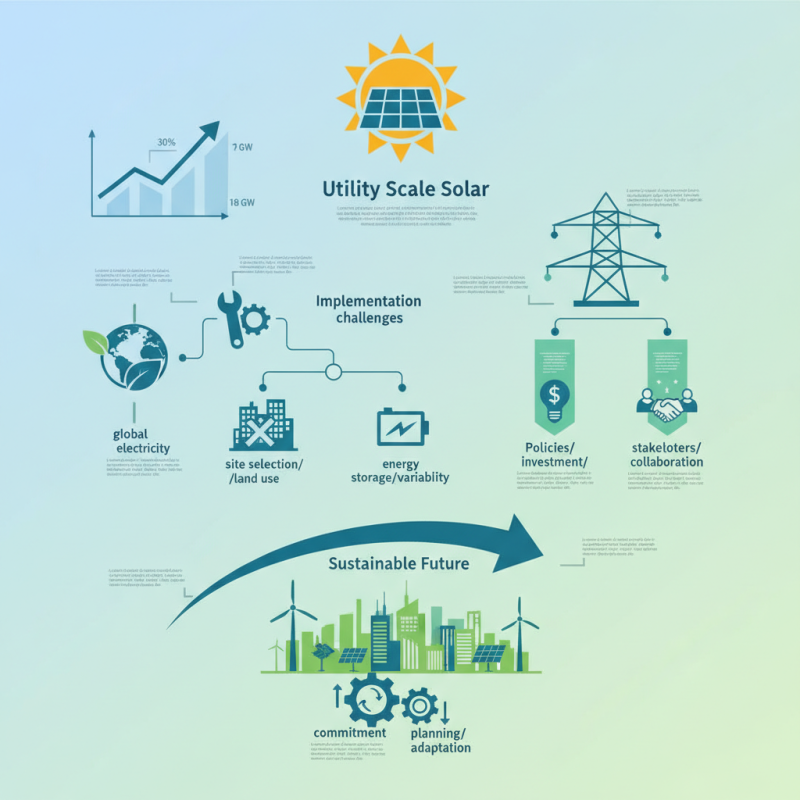
Utility scale solar is gaining traction as a key player in the renewable energy sector. According to the International Energy Agency (IEA), solar energy could account for over 30% of global electricity generation by 2030. This shift towards utility scale solutions is vital for reducing carbon emissions and combating climate change. In 2021, over 18 GW of new utility scale solar capacity was installed in the U.S. alone, reflecting strong market growth.
However, implementing these solutions poses challenges. Site selection can hinder efficient deployment. Many areas with high solar potential face land use conflicts. Additionally, the variability of solar energy necessitates effective storage solutions. Without proper energy storage, utility scale solar projects may struggle to provide consistent power. These obstacles remind us that while the potential is immense, careful planning and adaptation are essential for success.
As the world endeavors to transition to sustainable energy, robust frameworks must support utility scale solar projects. Industry reports emphasize the need for policies that incentivize investment and facilitate technology innovation. Energy stakeholders must collaborate to create a more resilient grid capable of integrating renewable sources. Embracing utility scale solar can lead us towards a sustainable future, but it requires commitment and ongoing reflection on practices and obstacles.
Understanding Utility Scale Solar Solutions and Their Importance
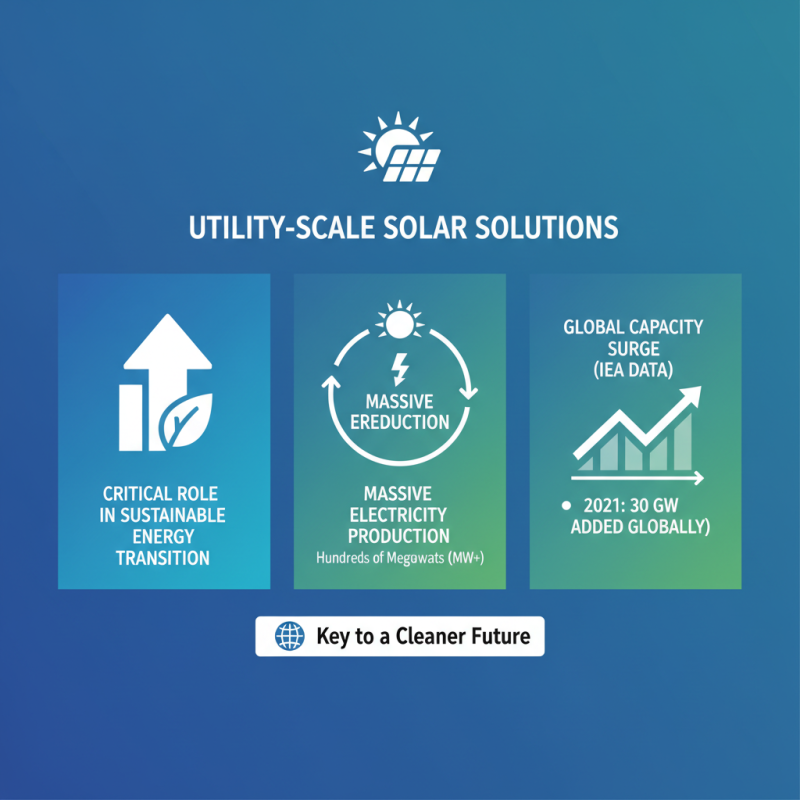
Utility scale solar solutions play a critical role in the transition to sustainable energy. These large-scale installations produce significant amounts of electricity, often exceeding hundreds of megawatts. According to the International Energy Agency, solar power capacity has surged, and utility scale projects account for a growing share of this increase. In 2021 alone, an estimated 30 gigawatts were added globally, demonstrating the momentum of this sector.
Implementing these solutions involves various complexities. Site selection is crucial and can determine efficiency. Factors like land use, proximity to the grid, and local climate must be considered. Despite their potential, some projects face pushback from communities and regulatory hurdles. A report from the U.S. Department of Energy noted that public acceptance can significantly influence project timelines and success.
Moreover, maintenance and operational costs often challenge long-term viability. While solar energy can reduce emissions, it requires careful planning and investment. The potential for land degradation and habitat disruption cannot be ignored. Balancing the need for renewable energy with environmental considerations remains a significant challenge in the quest for a sustainable future.
Key Components Required for Utility Scale Solar Infrastructure
Utility scale solar solutions require careful planning and key components. These elements ensure efficient energy generation and long-term sustainability. Understanding these components is essential for any solar project.
The first critical component is solar panels. High-efficiency panels maximize energy conversion. However, selecting the wrong type can hinder performance. Consider local weather patterns when choosing. Durability and efficiency can vary drastically.
Inverters are another vital part. They convert DC electricity from solar panels into AC electricity. Poor quality inverters can reduce energy output. Ensure they have robust warranties and reliable efficiency ratings. It's crucial to regularly assess their performance.
Lastly, energy storage systems enhance reliability. They store excess energy for later use. Many projects underestimate storage needs. It's important to analyze consumption patterns carefully. Proper planning here can avoid costly adjustments later.
**Tip:** Conduct regular maintenance checks on components. This promotes longevity and efficiency.
**Tip:** Collaborate with local experts. Their insights can improve project design and implementation.
Steps to Identify Suitable Locations for Solar Installations
Identifying suitable locations for utility-scale solar installations is crucial for optimizing energy production. A recent report by the International Renewable Energy Agency (IRENA) states that solar energy requires high solar irradiation areas. Regions with an average solar radiation of over 5 kWh/m²/day are ideal. Analyzing such climate data is the first step.
Geographical features also play a critical role. Flat terrain is generally preferred for solar farms, as it reduces installation costs and land preparation. However, not all flat lands are suitable. Proximity to existing electrical infrastructure is necessary for effective integration into the grid. This often leads to challenges in finding ideal combinations of land and infrastructure.
Environmental impact assessments are essential before installation. The disturbance of local ecosystems can have significant consequences. Stakeholders often overlook this aspect. Community acceptance is another hurdle; local opposition can stall projects. Addressing these issues requires transparent communication. Moreover, site selection must balance energy production potential and ecological preservation, which can be quite challenging. Drawing on available data can guide these decisions but should be approached with caution and consideration for long-term sustainability.
Financing Options for Developing Utility Scale Solar Projects
Financing utility scale solar projects can be challenging. Various options exist, each with its own advantages and drawbacks. Public and private investments are crucial. A lack of clarity about returns often deters investors. For example, solar energy’s initial costs can be high. This uncertainty sometimes deters smaller companies from stepping in.
Debt financing remains a popular choice. It allows developers to retain ownership while securing necessary funds. Banks and financial institutions often provide loans. However, terms may be strict. This situation may pressure companies to deliver results quickly. Also, public funding can be slow and bureaucratic. It often requires extensive paperwork and delays. In some cases, this may hinder projects from starting on time.
Power purchase agreements (PPAs) present another option. They can provide long-term income. These contracts can guarantee a fixed price for electricity over many years. However, relying too much on PPAs might create risks during price fluctuations. Developers need to examine similar projects beforehand. It’s vital to remain flexible and responsive to market changes.
Regulatory and Environmental Considerations in Solar Implementation
Implementing utility scale solar solutions requires careful consideration of regulatory and environmental factors. Regulations differ widely across regions. Understanding local laws is essential. Permits must be obtained for construction and operation. Environmental impact assessments are often required. These assessments help identify potential disruptions to local ecosystems.
Furthermore, community engagement is critical. Local residents should be informed early in the process. Their concerns can shape project plans. It fosters goodwill and reduces opposition. Solar projects can disrupt habitats. Mitigation strategies are often necessary. Techniques may include creating buffer zones or relocating sensitive species.
One common oversight is underestimating timelines. Projects may face delays due to regulatory hurdles. This can lead to increased costs. Another issue is the availability of land. Not all locations are suitable for large-scale solar farms. Proper site selection is vital for energy efficiency. Adapting plans based on these challenges is crucial for success.
Utility Scale Solar Solutions - Energy Production Comparison