What is Solar PV and How Does it Work?
Solar photovoltaic (PV) technology is revolutionizing the way we harness energy from the sun. As Dr. Emily Chen, a leading expert in renewable energy, once stated, "Solar PV is not just a technology; it's a pathway to a sustainable future." This statement reflects the growing recognition of solar PV’s potential to mitigate climate change by providing clean, renewable energy.
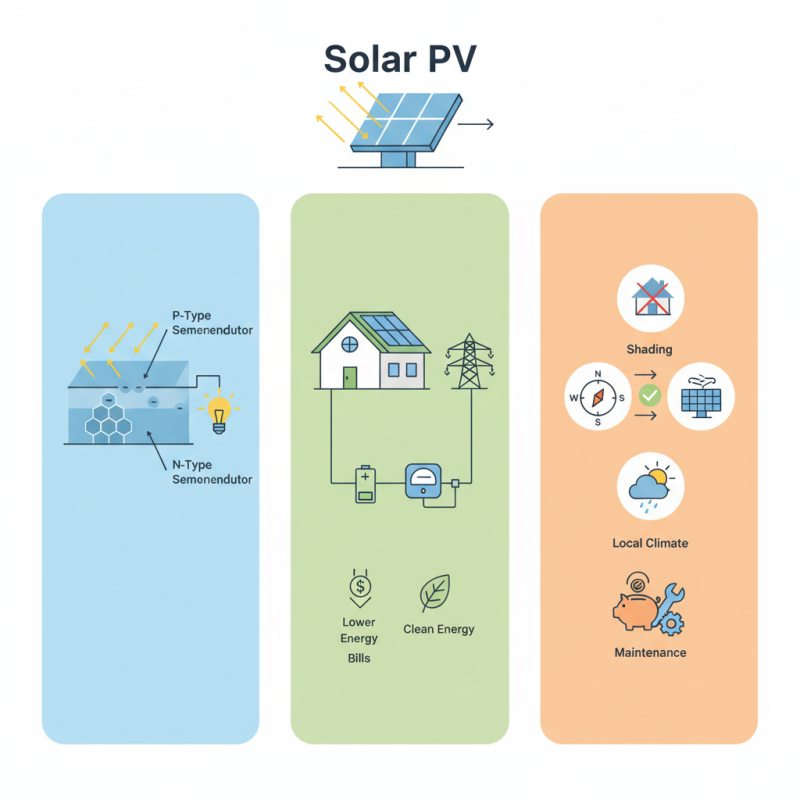
Solar PV systems convert sunlight directly into electricity. They use photovoltaic cells made from semiconductor materials like silicon. When sunlight hits these cells, it creates an electric current. This innovation allows homeowners and businesses to generate their own power. It reduces reliance on fossil fuels and lowers energy bills. However, not every location is ideal for solar PV. Factors like shading, orientation, and local climate significantly impact efficiency.
Despite the advantages, solar PV projects face challenges. Initial costs can be high, and the technology requires maintenance. Understanding these aspects is crucial for informed decision-making. As solar PV continues to evolve, its role in the global energy landscape becomes increasingly significant. Balancing enthusiasm with realistic expectations is vital for stakeholders in this dynamic industry.
What is Solar Photovoltaic (PV) Technology?
Solar photovoltaic (PV) technology is a transformative force in the renewable energy sector. It converts sunlight into electricity using semiconductor materials that exhibit the photovoltaic effect. This process occurs when sunlight hits solar cells, freeing electrons and creating an electric current. According to the International Energy Agency (IEA), global solar PV capacity reached 1,000 gigawatts in 2021, a testament to its rapid growth and adoption.
Despite its promise, solar PV technology is not without challenges. Efficiency levels typically range from 15% to 22% for commercially available panels. This means a significant amount of sunlight goes unused. Additionally, factors such as location, weather, and installation can significantly influence performance. For instance, regions with consistent sunlight yield better outcomes, while cloudy areas see reduced efficiency. Moreover, the environmental impact of manufacturing solar panels raises questions. Life cycle assessments reveal that producing PV modules requires significant energy and resources.
The cost of solar technology has decreased dramatically, making it more accessible. In 2022, the cost per watt for solar PV systems dropped to around $0.20, promoting widespread installation. However, the initial investment can still be a barrier for many consumers. Policymakers must address these hurdles to foster broader adoption. Solar PV technology holds immense potential for a sustainable energy future, but its implementation requires careful consideration and continuous improvement.
The Science Behind Solar PV: How Photovoltaic Cells Generate Electricity
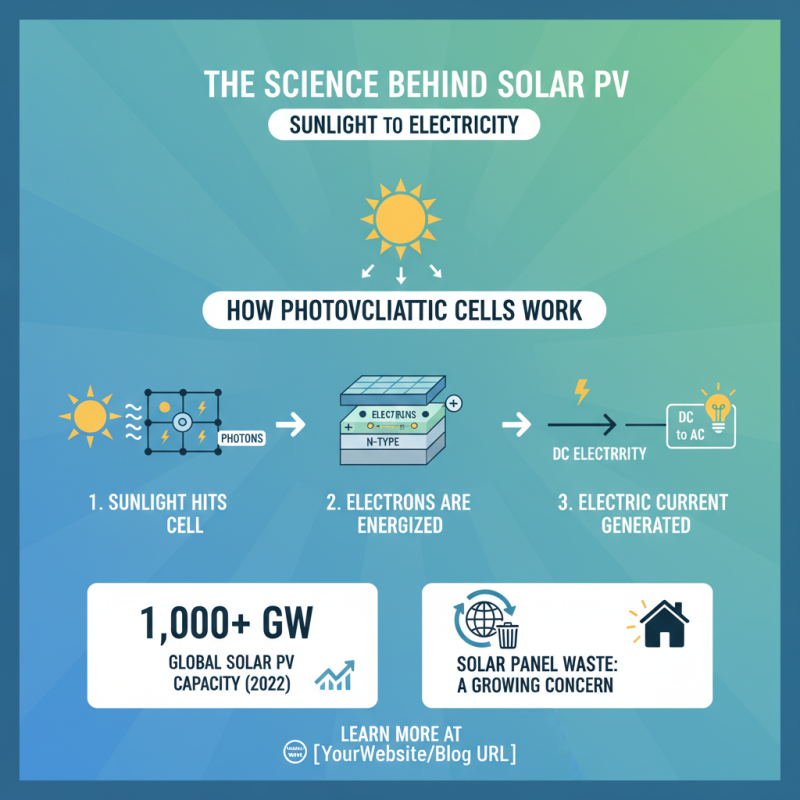
Solar Photovoltaic (PV) technology harnesses sunlight and converts it into electricity. This process relies on photovoltaic cells, primarily made of silicon. When sunlight hits these cells, photons energize electrons, generating an electric current. Industry analysts estimate that the global solar PV capacity exceeded 1,000 GW in 2022, a significant leap from past years. However, while adoption grows, issues like solar panel waste remain a concern.
The science behind photovoltaic cells involves the photovoltaic effect. This phenomenon occurs when light energy creates an electric field in a semiconductor, enabling current flow. According to the International Energy Agency, solar PV could potentially generate 14% of the world’s electricity by 2030. Yet, the effectiveness of PV systems can vary based on geographic location, local weather, and installation quality.
Despite the positive outlook, challenges exist. Some regions lack sufficient sunlight for optimal electricity generation. Maintenance of solar panels can be complex, with dirt and debris reducing efficiency. As the solar industry evolves, addressing these imperfections will be crucial for sustainable growth. The balance between innovation and environmental impact must be examined closely.
Key Components of a Solar PV System: Inverters, Panels, and Mounts
Solar photovoltaic (PV) systems are composed of three key components: inverters, panels, and mounts. Understanding these elements is essential for anyone considering solar energy. According to the International Renewable Energy Agency (IRENA), solar PV capacity reached 1,000 GW by 2020, showcasing its rapid growth in recent years.
Solar panels are the heart of a PV system. They convert sunlight into direct current (DC) electricity. Typically made of silicon, these panels come in various efficiencies. Standard models yield around 15-20% efficiency, meaning only a fraction of sunlight is converted into usable energy. Despite advances, losses occur due to shading and temperature.
Inverters play a crucial role in converting DC electricity into alternating current (AC), which is used in homes. String inverters are common in residential setups, often limited by shading. Microinverters offer better tracking but can be more expensive. Mounts are equally important, as they determine the angle and position of panels. Proper installation can increase energy capture by up to 30%. However, complex roof structures may lead to inefficiencies if not planned well. As the market matures, addressing these challenges remains vital for optimizing solar energy systems.
What is Solar PV and How Does it Work?
| Component |
Description |
Function |
| Solar Panels |
Devices that convert sunlight into electrical energy using photovoltaic cells. |
Capture sunlight and generate DC electricity. |
| Inverters |
Electronics that convert DC electricity from solar panels into AC electricity. |
Make solar energy usable for home appliances and the grid. |
| Mounting Systems |
Structures that secure solar panels to rooftops or ground surfaces. |
Support and position solar panels for optimal sunlight exposure. |
| Batteries |
Storage devices that hold electricity produced by solar panels. |
Provide power during times of low sunlight or at night. |
| Charge Controllers |
Devices regulating the voltage and current coming from the solar panels to batteries. |
Prevent battery overcharging and extend battery life. |
Solar PV Efficiency: Understanding Conversion Rates and Performance Metrics
Solar photovoltaic (PV) systems convert sunlight into electricity. Their efficiency is critical in determining performance. Solar PV efficiency refers to the rate at which sunlight is converted into usable energy. Different technologies exhibit varying conversion rates. For instance, monocrystalline panels often achieve higher efficiency than polycrystalline ones. However, efficiency isn’t the only metric to consider.
Performance metrics include factors such as temperature coefficient and degradation rate. The temperature coefficient indicates how performance changes with temperature increases. A lower temperature coefficient means better performance in hot conditions. Degradation rates inform us how much efficiency decreases over time. High-quality panels tend to degrade less. Understanding these metrics helps consumers make informed decisions.
It's essential to note that real-world conditions can affect efficiency. Weather, shading, and the angle of installation play significant roles. For instance, a panel installed at a less-than-ideal angle may not perform as well as expected. Though manufacturers provide lab-tested efficiency rates, actual performance may vary. Being aware of these variables brings more realistic expectations. Solar PV systems show promise, but they require careful consideration of their efficiency and performance metrics.
Global Solar PV Market Trends: Capacity Growth and Future Projections
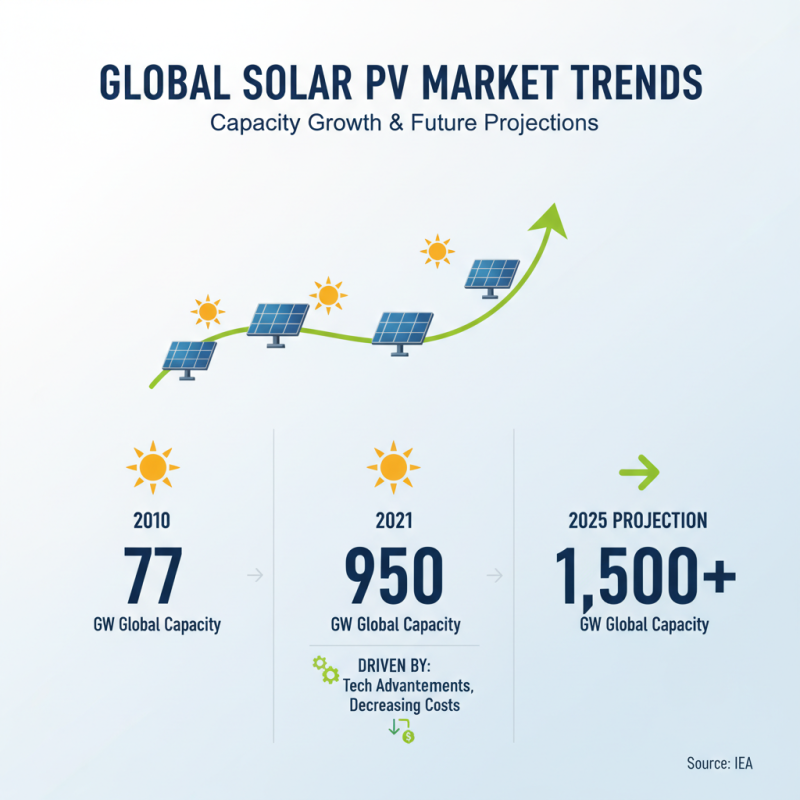
The global solar photovoltaic (PV) market is witnessing unprecedented growth. According to the International Energy Agency (IEA), global solar capacity has surged from 77 GW in 2010 to approximately 950 GW in 2021. This remarkable expansion is driven by technological advancements and decreasing costs of solar panels. By 2025, the IEA projects capacity could exceed 1,500 GW.
Emerging markets play a crucial role in this growth. Countries in Asia, particularly China and India, are leading the charge. For instance, China's solar capacity alone accounts for about 50% of the global total. However, challenges remain. Issues such as supply chain disruptions and limited grid integration can hinder expansion. Local governments must focus on supportive policies to address these obstacles.
Future projections suggest an optimistic outlook for solar PV. The Global Solar Energy Market Report estimates a compound annual growth rate (CAGR) of 20% from 2022 to 2030. This growth is essential for achieving climate goals. Yet, the journey isn't without its uncertainties, particularly with fluctuating raw material prices. Continuous innovation and investment will be key to sustaining momentum in this dynamic sector.