Choosing the right solar solutions for global buyers is not simply a matter of selecting the highest-rated panel. Climate, electricity prices, grid reliability, land availability, and local maintenance skills can change the result. A rooftop system that performs well in sunny Australia may need different inverters and mounting materials in a humid coastal region. Buyers should examine the complete system, not only the module’s efficiency figure.
Dr. Fatih Birol, Executive Director of the International Energy Agency, has said, “Solar PV is now the cheapest source of electricity in history.” His statement reflects a major market shift, but affordability still depends on system design. A commercial buyer may need battery storage, smart energy management, and backup capacity. A remote community may value durability, simple repairs, and stable operation more than maximum output. These are practical differences.
This guide compares grid-tied, off-grid, hybrid, rooftop, utility-scale, and portable solar solutions. It considers energy demand, installation conditions, warranties, safety certifications, and long-term operating costs. Real projects often reveal uncomfortable details. Dust can reduce output. Batteries can be oversized. Cheap components may create expensive service problems later. I have also seen buyers focus on payback periods while overlooking replacement parts and technician availability. That approach needs reconsideration. The strongest choice usually balances performance, resilience, transparency, and local support. No single solar solution fits every country, business, or household. Context decides value.
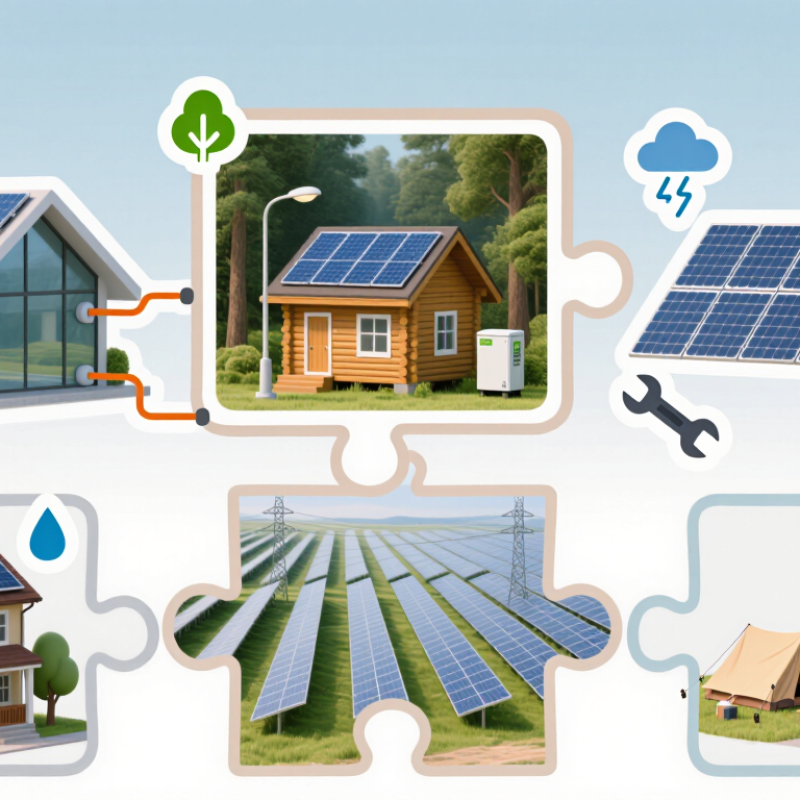
Global buyers are no longer choosing solar solutions from a small, familiar menu. IRENA reported that global photovoltaic capacity reached about 1.42 TW in 2023. This figure shows enormous deployment, but it does not mean every market needs the same system. A warehouse in Spain may need rooftop PV, while a rural clinic in Kenya may require solar panels, batteries, and backup controls. Climate, roof strength, electricity prices, and grid reliability should guide the decision.
In practical procurement, modular systems are often easier to finance, install, and expand. Utility-scale projects suit regions with available land and strong transmission networks. Rooftop systems can reduce daytime electricity purchases and avoid some land conflicts. Battery storage adds value where evening demand rises or outages are common. Yet batteries increase cost, maintenance needs, and fire-safety responsibilities. They are not an automatic answer.
The 1.42 TW milestone also demands careful interpretation. Capacity measures installed power, not actual annual electricity production. Dust, heat, shading, weak grids, and curtailment can reduce output. Buyers should request location-specific yield studies, equipment test records, warranty terms, and independent technical reviews. Site inspections matter. A spreadsheet can miss corrosion near a coastline or cable damage beneath a hot roof. My own assessment would still leave room for revision, because resource data and local rules are sometimes incomplete. Reliable solar decisions combine global statistics with detailed, on-site evidence.
What Type of Solar Solutions Are Best for Global Buyers?
Match Technology to Climate: Solar Led 75% of New Renewable Capacity, According to IRENA
Solar has become central to the energy transition. IRENA reports that solar led 75% of new renewable capacity, showing strong global demand. Yet buyers should not choose panels by efficiency alone. Climate changes performance, maintenance needs, and project returns. Hot regions require modules with low temperature coefficients. Dusty areas need practical cleaning access and strong protective coatings. Coastal sites demand corrosion-resistant structures and careful cable protection. Humid climates also require reliable sealing against moisture.
Tips: Study at least twelve months of local weather data. Check wind speed, rainfall, dust levels, and average temperatures. Ask suppliers for tested performance under similar conditions. Review warranties carefully, but do not treat them as automatic protection. Installation quality still matters greatly.
In colder regions, snow loads and shorter winter daylight affect system design. Higher elevations may improve sunlight but increase wind exposure. For rooftops, inspect load capacity before ordering equipment. For remote projects, prioritize simple monitoring and locally available replacement parts. Battery storage can support evening demand, but extreme heat may reduce battery life. Oversizing is not always wise. A larger system can create unused electricity or unnecessary costs. A smaller design may also disappoint during cloudy seasons. The difficult part is balance, and every site deserves a fresh technical review.
| Climate or Operating Environment | Recommended Solar Solution | Key Design Features | Typical Buyer Priorities | Important Planning Considerations |
|---|---|---|---|---|
| Hot and arid deserts | Ground-mounted photovoltaic system with bifacial modules and a fixed-tilt or single-axis structure | High-temperature-rated components, strong ultraviolet resistance, wide row spacing and cleaning access | High energy yield | Dust can reduce output; plan regular cleaning, water-efficient maintenance and thermal derating analysis. |
| Hot and humid tropical regions | Corrosion-resistant photovoltaic system using sealed junction boxes, robust mounting hardware and optional battery storage | Moisture-resistant enclosures, anti-corrosion materials, high humidity tolerance and drainage design | Reliability | Evaluate salt mist, mold, heavy rainfall, lightning exposure and local flood risk before installation. |
| Coastal and marine environments | Salt-mist-resistant rooftop or ground-mounted photovoltaic system | Marine-grade or appropriately protected metalwork, corrosion-resistant fasteners and sealed electrical equipment | Long service life | Use site-specific corrosion assessments and confirm that mounting and electrical components are suitable for coastal exposure. |
| Temperate regions with seasonal variation | Grid-connected photovoltaic system with a roof- or ground-mounted array | Balanced design for moderate temperatures, snow-load assessment where required and optional energy storage | Cost balance | Compare annual solar irradiation, seasonal demand, electricity tariffs, roof orientation and grid-connection requirements. |
| Cold and snowy regions | High-latitude photovoltaic system with steep mounting angles and snow-aware structural design | Verified snow and wind loads, cold-temperature operating capability, durable cables and accessible maintenance layout | Winter resilience | Snow cover may temporarily reduce production, while cold temperatures can improve module electrical efficiency. |
| High-wind or cyclone-prone areas | Engineered rooftop or ground-mounted photovoltaic system with reinforced anchoring | Site-specific wind-load calculations, secure module clamps, strengthened foundations and protected cable routing | Structural safety | Design must follow applicable local building codes and account for wind uplift, debris impact and emergency shutdown access. |
| Remote or weak-grid locations | Solar photovoltaic and battery energy storage system, optionally supported by another dispatchable generator | Power management controls, modular batteries, remote monitoring and load-priority controls | Energy independence | Size the system using daily load profiles, seasonal solar resources, battery depth of discharge and backup requirements. |
| Urban areas with limited roof space | High-efficiency rooftop photovoltaic system with self-consumption controls | Compact layout, lightweight mounting where appropriate, rapid shutdown capability and flexible inverter placement | Space efficiency | Check roof condition, shading from nearby buildings, fire-access rules, structural capacity and local permitting. |
| Agricultural land and dual-use sites | Elevated agrivoltaic system designed to share land with crops or grazing | Raised structures, wider equipment access, controlled shading and layout adapted to agricultural operations | Land efficiency | Assess crop compatibility, irrigation access, machinery clearance, biodiversity objectives and local land-use regulations. |
| Commercial and industrial facilities | Rooftop photovoltaic system with optional battery storage and demand-management controls | Load-following operation, three-phase electrical integration, monitoring and protection coordination | Lower operating cost | Match system size to daytime consumption, demand charges, roof lifespan, export limits and production interruptions. |
| Data note: Solar photovoltaics accounted for approximately three-quarters of global renewable capacity expansion in 2023, according to the International Renewable Energy Agency (IRENA). Actual system performance depends on solar irradiation, temperature, shading, soiling, equipment selection, system losses and local regulations. | ||||
| Reference: International Renewable Energy Agency (IRENA), Renewable Capacity Statistics 2024; International Electrotechnical Commission (IEC) photovoltaic system standards and applicable local building and electrical codes. | ||||
In 2022, about 685 million people still lacked electricity, according to the World Bank. This figure should shape solar purchasing decisions. Off-grid communities need dependable power, not impressive brochures.
Small solar home systems can support lamps, phone charging, radios, and small fans. Larger households may require batteries, efficient appliances, and higher-capacity inverters. Remote clinics and schools often need solar mini-grids with storage. These systems can power vaccine refrigerators, computers, water pumps, and evening classes.
Local conditions matter more than advertised capacity. Buyers should check sunlight patterns, seasonal rainfall, dust, transport routes, and repair skills. A battery that works well in a dry city may struggle in extreme heat. Spare parts should be available locally. Installation must follow recognized electrical and safety requirements.
Field assessments often expose overlooked details. A system may produce enough daytime power but fail after several cloudy days. Users may also add appliances later, exceeding the original design. That is not a minor issue. It changes the entire energy plan. Buyers should request performance data, warranty terms, maintenance training, and clear recycling arrangements for batteries. Reliable suppliers explain limitations openly. Still, even careful planning cannot remove every risk. Some projects need stronger grids, better financing, or community management before solar can deliver lasting value.
What Type of Solar Solutions Are Best for Global Buyers?
For global buyers, solar planning now depends on more than panel output. Battery storage and grid connections deserve equal attention. According to IRENA, battery storage costs fell by 89% between 2010 and 2023. This change improves the case for storing midday solar power. Energy can then support evening demand, backup loads, or grid services.
Lower battery prices do not make every project affordable. In site assessments, I have seen shipping, installation, protection systems, and permits change the final budget sharply. A battery may look inexpensive on paper. It can still become costly in a remote region. Buyers should compare usable capacity, expected cycles, warranty terms, temperature limits, and replacement planning. Safety is not optional.
Grid links also need early engineering review. A project may produce excellent solar energy but face export limits or expensive connection upgrades. Local rules can affect metering, voltage control, and approval schedules. This is where early technical surveys help. They reveal weak grid sections, long cable routes, and possible transformer constraints.
Some buyers overbuild storage before measuring demand. That mistake remains common. Hourly load data should guide storage duration and power ratings. A small commercial site may need evening shifting, while a rural facility may need longer backup. The right solution is not always the largest battery. It is the system that matches local sunlight, grid reliability, tariffs, climate, and maintenance skills.
Plan for storage and grid links: battery storage costs fell by approximately 89% from 2010 to 2023, improving the business case for solar systems that combine generation, batteries, and flexible grid connections.
Indexed battery storage cost: 2010 = 100. The 2023 index of 11 represents an approximate 89% reduction. Source: International Renewable Energy Agency (IRENA).
The 2024 Lazard benchmark places utility-scale solar LCOE between $29 and $92 per MWh. This range gives global buyers a useful starting point for comparing generation costs. It also shows why one universal solar price is unrealistic. Financing rates, sunlight levels, land costs, equipment quality, and grid connection charges can change the result sharply.
A project in a dry, high-irradiance region may produce power at the lower end. A site with weak transmission access may approach the upper end.
Cheap electricity on paper. Expensive delays in practice.
Buyers should request the model behind every quoted figure, including capacity factor, degradation, operating costs, and financing assumptions. Storage, transmission upgrades, taxes, and curtailment may sit outside the headline LCOE.
For utility buyers, the benchmark is valuable but incomplete. It should support technical and financial due diligence, not replace it.
Compare annual production against local demand and hourly grid prices.
Review ten-year weather data, not only a contractor’s expected yield.
Check whether the project can secure permits and a stable interconnection agreement.
These details often decide the real value of solar power.
A lower LCOE can still produce weaker returns if output arrives when demand is low. A slightly higher-cost project may perform better with stronger grid access and predictable financing. That trade-off deserves careful review.
The $29–$92/MWh range is a guide, not a promise.