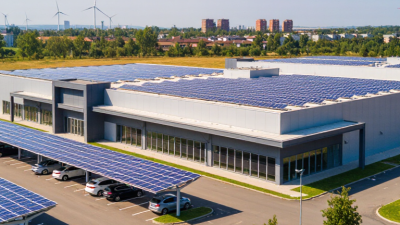
What Is Utility Scale Solar and How Does It Work?
Utility-scale solar is not simply rooftop solar made bigger. It refers to large, ground-mounted photovoltaic plants that deliver electricity to the grid. Their capacity can range from tens to hundreds of megawatts, though definitions vary by market. Rows of modules capture sunlight; inverters convert direct current into grid-compatible alternating current. Transformers raise voltage before power travels through transmission or distribution lines. Some projects pair batteries with solar, but storage is not built into every plant.
The scale is striking. IRENA’s Renewable Capacity Statistics 2024 reported 1,419 GW of global solar PV capacity at year-end 2023. Solar PV capacity grew by about 346 GW that year, according to the same report. These totals include rooftop and utility-scale systems, so they should not be mistaken for utility-scale capacity alone. The IEA’s World Energy Outlook 2020 captured the industry’s momentum. Its Executive Director, Fatih Birol, called solar “the new king of electricity markets around the world.” That is a powerful phrase, but project economics still depend on sunlight, land, grid access, financing, and equipment performance. A project’s output can change by hour and season. Understanding the hardware is only part of the story. This guide follows power from panel to grid and explains the choices behind siting, connection, and storage. The numbers can feel clean; real sites are messier. Local terrain, transmission congestion, and weather shape outcomes in ways a global chart cannot show. That nuance matters.
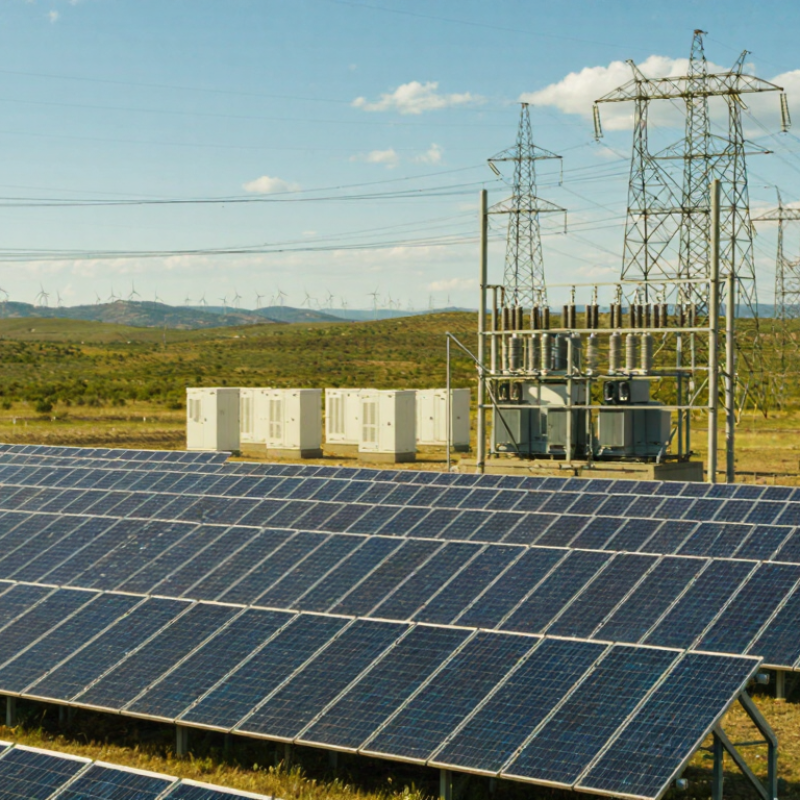
What Defines Utility-Scale Solar Power
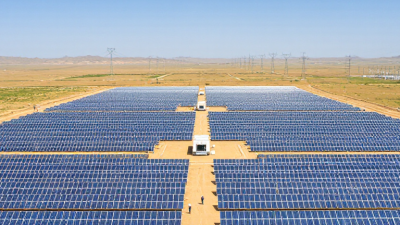
Utility-scale solar is defined less by one universal size threshold than by its role in the power system. A project often spans many acres and produces electricity at megawatt scale, though definitions vary by region. Its output goes to the wider grid through equipment such as a substation, rather than serving one building alone. The distinction is practical. Panels in a solar field may supply homes, schools, and factories across a service area. The label is not perfectly precise. Some smaller projects operate as grid resources, while larger systems may serve a nearby customer. A capacity label alone can mislead; the project’s grid role matters too.
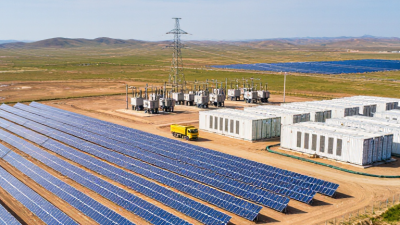
At the site, photovoltaic modules convert sunlight into direct-current electricity. Inverters change it to alternating current, and transformers raise the voltage for grid delivery. Operators monitor production, equipment temperatures, and faults from a control room. Rows are spaced to limit shading, while access roads allow inspection and repairs. Clouds can lower output quickly, so forecasts help grid operators balance supply and demand. Batteries may shift some midday energy to later hours, but storage is optional. Even a brief equipment or line outage can disconnect a plant from the grid.
What Defines Utility-Scale Solar Power?
Utility-scale solar farms generate electricity for the grid, typically using photovoltaic panels and inverters to convert solar energy into grid-compatible power. Annual generation estimates below assume a 25% capacity factor and 8,760 hours per year; actual output varies by location, weather, and system operation. The threshold for “utility-scale” can vary by definition.
How a Solar Farm Is Planned and Built
What Is Utility Scale Solar and How Does It Work?
How a Solar Farm Is Planned and Built
A solar farm begins with a site, not a row of panels. Developers assess sunlight, land access, slope, drainage, soil strength, and nearby transmission lines. Field teams may drill test holes and walk the site after rain. A map can look convincing. Soil often disagrees. Environmental reviews and community discussions can also change the layout, access roads, or construction schedule.
Grid access is a major planning challenge. Berkeley Lab’s 2024 report, Queued Up, found about 2,600 gigawatts of proposed generation and storage awaiting grid connection at the end of 2023, including roughly 1,086 gigawatts of solar. A queue position does not guarantee construction; studies may require upgrades or reveal delays. Engineers then refine the design, estimate costs, secure permits, and plan equipment delivery. IRENA’s Renewable Power Generation Costs in 2023 reported a global weighted-average installed cost of US$758 per kilowatt for utility-scale solar PV. Actual costs vary with location, labor, and grid work.
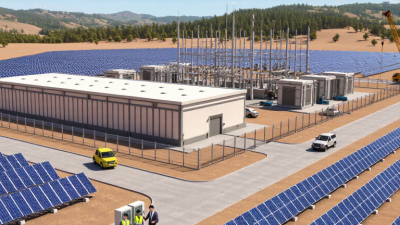
Construction crews prepare access roads, install foundations, and set mounting structures or trackers. They attach panels, connect strings of modules to inverters, and build a substation that raises voltage for transmission. Cables often run beneath graded ground, so drainage and erosion controls matter. Before operation, technicians test protection systems, inverters, and grid response. Small details count: a poorly routed trench can disrupt work across a large field. Even careful plans need revision.
How Inverters and Transformers Prepare Power for the Grid
A utility-scale solar plant sends power through several conversion stages before it reaches transmission lines. Its panels produce direct current, but the grid uses alternating current. Inverters perform that conversion and synchronize output with grid voltage and frequency. They can also adjust reactive power, which helps manage voltage at the connection point.
The scale is growing quickly. The IEA PVPS Trends 2024 report estimated 447 gigawatts of new photovoltaic capacity worldwide in 2023, taking cumulative capacity beyond 1.6 terawatts. NREL’s 2024 Annual Technology Baseline uses an inverter-efficiency assumption near 98% for utility-scale systems. That is a modeling assumption, not a guarantee for every operating plant. Even small conversion losses matter across thousands of inverters.
Transformers then raise voltage for collection and transmission. Inverter output may enter a plant’s medium-voltage network, then pass through a main transformer to the grid’s higher voltage. Protective relays monitor faults and can disconnect equipment when conditions fall outside safe limits. Settings must match the local grid, not just the equipment manual. That detail is easy to miss. Heat, dust, cable length, and changing grid conditions can affect real-world performance. A clean one-line diagram rarely shows the full operational picture.
How Utility-Scale Solar Plants Deliver Electricity to Consumers
A utility-scale solar plant does more than collect sunlight. Rows of photovoltaic panels convert light into direct-current electricity. Inverters change it into alternating current, which the grid can use. Transformers raise the voltage before power travels through a substation and onto transmission lines. Then comes conversion. Operators monitor output and grid conditions as electricity moves toward homes, businesses, and public services.
The U.S. Energy Information Administration reported that utility-scale solar generated about 163 billion kilowatt-hours of electricity in 2023. That power does not travel on a dedicated route to one household; it enters a shared grid, where supply and demand must stay balanced. The timing matters. Output falls after sunset, so grid operators coordinate solar with other generators, storage, and changing demand. The handoff is easy to overlook—and transmission capacity can become a bottleneck.
Costs also shape how quickly plants connect to consumers. IRENA’s Renewable Power Generation Costs in 2023 report put the global weighted-average cost of utility-scale solar at about $0.044 per kilowatt-hour. That figure describes generation costs, not the full cost of delivering power through a grid. A sunny site may produce plenty, yet distant customers still depend on available lines and dependable grid operations. The system works, but it is not frictionless.
What Is Utility Scale Solar and How Does It Work? - How Utility-Scale Solar Plants Deliver Electricity to Consumers
| System stage |
Typical scale or parameter |
What happens |
How electricity moves toward consumers |
| Plant capacity |
Many projects are rated in the tens to hundreds of megawatts; capacity may be stated in DC or AC megawatts. |
A large number of photovoltaic modules are connected into arrays to generate power across the site. |
The plant’s AC output is coordinated with the local grid connection and its operating limits. |
| Sunlight to direct current (DC) |
Individual modules commonly have an output rating of several hundred watts DC, depending on the model and conditions. |
Solar cells convert sunlight into DC electricity. Modules are wired into strings and arrays; fixed racks or tracking systems position them to collect sunlight. |
DC power flows through electrical cables and protective equipment toward the inverters. |
| DC collection and conversion |
A DC-to-AC capacity ratio around 1.1–1.4 is commonly used in project design, though the chosen ratio varies. |
Inverters convert DC electricity into grid-compatible AC electricity and help manage voltage, frequency, and power output. |
Inverter outputs join the plant’s AC collection system. |
| Plant collection system |
Collection voltage is project-specific; medium-voltage systems are commonly used within solar plants. |
Cables and switchgear gather AC power from inverter areas and route it to the plant substation. |
Protection and control equipment can isolate faults and monitor the flow of electricity. |
| Substation and grid connection |
The interconnection voltage depends on the grid, plant size, location, and utility requirements. |
Transformers raise voltage for efficient transmission. Substation equipment measures, protects, and controls the grid connection. |
Electricity passes to a transmission or distribution network after meeting applicable interconnection requirements. |
| Grid delivery and consumer use |
Electricity output changes with sunlight, weather, equipment availability, and grid instructions. |
Grid operators balance generation and demand. Networks route electricity, and local transformers reduce voltage for homes and businesses. |
Consumers receive electricity through the interconnected grid; the power delivered at a particular moment is not necessarily traceable to one plant. |
| Optional battery storage |
Storage is specified by power capacity (MW) and energy capacity (MWh); duration depends on the system design. |
A battery can store surplus electricity and discharge it later, subject to operating conditions and its state of charge. |
Storage can shift some energy to other hours or provide grid services, but it does not generate additional solar energy. |
Values and system configurations are indicative: project definitions, equipment ratings, grid requirements, and operating conditions vary by location.