What Are the Top 10 Solar PV Wire Manufacturers in China?
Choosing among China’s solar PV wire manufacturers requires more than comparing factory prices. The cable may look simple on a specification sheet. In service, it faces rooftop heat, ultraviolet exposure, moisture, and years of electrical load. Details matter. A small weakness in insulation, conductor consistency, or connector compatibility can complicate installation and reliability.
Photovoltaic reliability researcher John H. Wohlgemuth’s published work provides a useful perspective. A concise, non-verbatim takeaway is: “PV reliability depends on components that withstand real operating conditions, not just laboratory claims.” This is a paraphrase, not a direct quotation. It captures why buyers should examine verifiable test data, material specifications, production controls, and traceability before shortlisting suppliers. A polished brochure is not enough.
This overview compares ten Chinese manufacturers using practical criteria: product range, stated standards, quality documentation, export experience, and technical support. It also points readers toward questions worth asking, such as how a supplier controls conductor dimensions or verifies insulation performance. Those details can be hard to assess from a website alone. No ranking can replace independent checks, and company information may change. The comparisons are a starting point, not a guarantee. Some suppliers may provide clearer evidence than others; that difference deserves attention. Buyers should confirm current certificates and specifications directly, then match the cable to their project design and installation conditions. Real projects are less tidy than catalog pages.
What Solar PV Wire Is and How It Supports Solar Systems
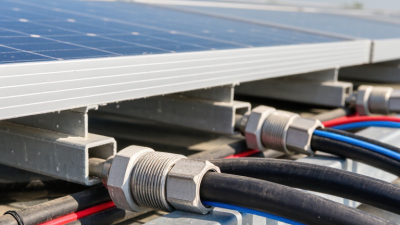
Solar PV wire carries direct-current electricity from module strings toward combiner equipment and the inverter. It may look like ordinary cable, but it works outdoors for years. Sunlight, heat, rain, and movement all challenge its insulation. Poor routing can add strain at connectors or expose a cable to sharp frame edges.
The scale makes these details important. IEA PVPS reported at least 407 GW of new solar PV capacity worldwide in 2023, bringing cumulative capacity to about 1.6 TW. A PV system’s wire must be selected for its voltage, current, installation environment, and expected temperature. Designers also account for voltage drop and current-carrying capacity; undersized conductors can waste energy and overheat. Check that cable specifications and testing align with applicable PV cable standards. Small parts. Big consequences.
On site, cables should be secured without being crushed, kept clear of standing water where practical, and protected from abrasion. Connectors need compatible ratings and careful assembly. I have seen cable routing treated as an afterthought; it deserves another look. The wire is not the power system, but a weak link can undermine its safe, dependable operation.
How to Assess Solar PV Wire Manufacturers in China
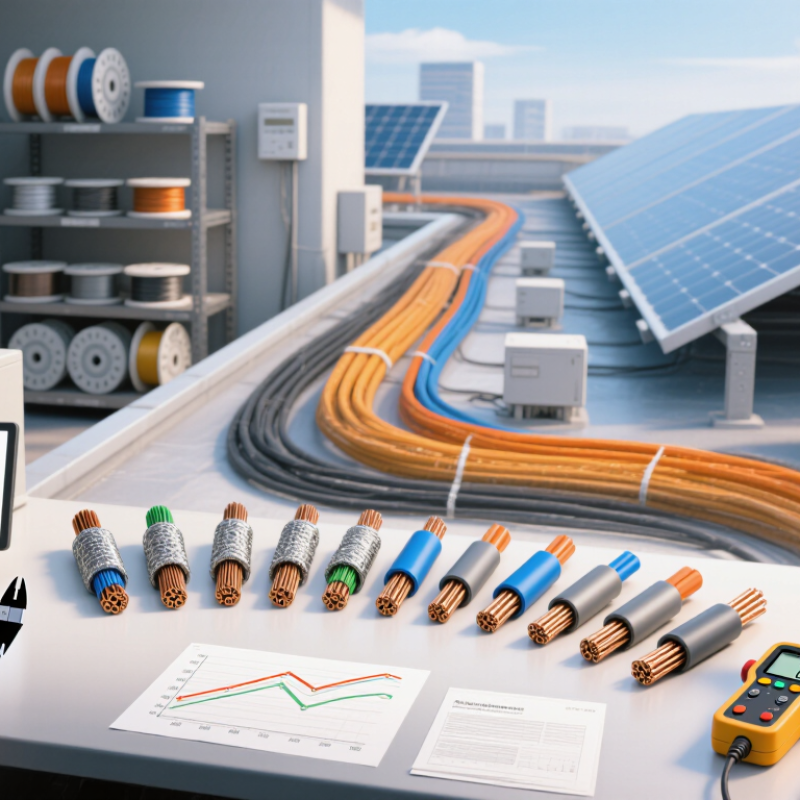
A reliable assessment of solar PV wire manufacturers in China starts with the product specification, not the sales pitch. Check conductor material, cross-sectional area, insulation type, rated voltage, and operating temperature. Confirm that the wire is intended for outdoor photovoltaic use and can withstand sunlight, moisture, and abrasion. Details matter. Ask for current test reports and product documents that match the exact model offered.
Look beyond certificates. Review how the manufacturer controls conductor stranding, insulation thickness, and batch identification. Request samples from regular production, then compare markings, dimensions, and test results with the specification. Independent laboratory testing can help verify important claims, especially when a project has strict technical requirements. A polished catalog may look convincing, but it cannot prove consistent production. Ask how defects are recorded and how corrective actions are checked.
Assess delivery capability and communication as carefully as price. Request realistic lead times, packaging details, and traceable batch records. Confirm that the supplier can explain technical questions clearly and provide documents in a usable format. Ask for evidence. A low quotation may reflect efficient production, different specifications, or simply an incomplete offer; it is not proof of poor quality. Compare equivalent products before deciding. One limitation is easy to miss: a successful sample does not guarantee every later shipment will match, so ongoing inspection still matters.
Ten Leading Solar PV Wire Manufacturers in China
Ten Leading Solar PV Wire Manufacturers in China
China’s solar-wire market has expanded alongside rapid project growth. The National Energy Administration reported 216.88 GW of newly installed solar capacity in China in 2023. IEA PVPS estimated global additions at about 447 GW that year. These figures explain demand, but they do not prove which cable suppliers lead. A credible comparison of ten manufacturers should examine verified output, export records, and quality-control evidence—not just catalogue claims.
For buyers, practical checks matter. Ask for conductor-resistance results, insulation-thickness records, and UV and thermal-aging test reports. Confirm that cable specifications match IEC 62930 or EN 50618 requirements, where applicable. On a real project, the cable must fit the connector, installation method, and expected site temperatures. Small mismatches can create avoidable rework. Product samples help, but one sample cannot represent every production batch.
A shortlist of ten Chinese manufacturers should therefore weigh traceable testing, stable copper sourcing, batch consistency, and after-sales support. Factory audits and independent laboratory reports add useful evidence. Yet rankings remain imperfect when suppliers disclose different data or use different capacity measures. Buyers should compare like with like and verify claims before ordering. That takes time. It is worth doing.
What Are the Top 10 Solar PV Wire Manufacturers in China? – Ten Leading Solar PV Wire Manufacturers in China
This table provides ten practical criteria for comparing solar PV wire manufacturers. It does not identify or rank individual companies; product specifications and certifications should be verified against each supplier’s current documentation.
| No. |
Comparison dimension |
Relevant specification or evidence |
What to verify |
| 1 | PV cable standards | IEC 62930 and EN 50618 cover electric cables for photovoltaic systems; both include 1.5 kV DC cable types. | Check the exact standard edition and cable type shown on the test report or certificate. |
| 2 | North American market compliance | UL 4703 is a standard for photovoltaic wire. | Confirm the specific product’s listing, voltage rating, and intended market; do not rely on a general company-level claim. |
| 3 | Conductor material | PV cables commonly use copper conductors; IEC 60228 defines conductor classes, including flexible Class 5 conductors. | Review conductor material, class, construction, and resistance data in the datasheet. |
| 4 | Insulation and sheath | Cross-linked, halogen-free compounds are commonly specified for PV cable insulation and sheathing. | Check material descriptions and test evidence for the complete cable construction. |
| 5 | Rated voltage | IEC 62930 and EN 50618 include PV cable types rated at 1.5 kV DC. | Match the cable rating to the system design and applicable installation requirements. |
| 6 | Conductor cross-section | Commonly offered PV cable sizes include 4 mm², 6 mm², and 10 mm²; availability varies by product range. | Verify current-carrying capacity, voltage drop, conductor resistance, and compatible terminals. |
| 7 | Temperature rating | Temperature limits depend on the cable standard and product construction; EN 50618 cable types specify a 90°C maximum conductor temperature for normal operation. | Use the product datasheet and installation conditions to confirm permissible operating temperatures. |
| 8 | Outdoor durability | PV cable standards include requirements relevant to outdoor use, such as resistance to environmental exposure. | Request test documentation for UV, ozone, and water resistance where required by the project. |
| 9 | Flame performance | IEC 60332-1-2 specifies a vertical flame propagation test for a single insulated wire or cable. | Check which flame test applies to the destination market and the exact supplied cable. |
| 10 | Traceability and quality control | Batch identification, routine test records, and documented inspection procedures help support product traceability. | Request sample labels, batch records, inspection plans, and certificates that correspond to the quoted model. |
Comparing Product Range, Certifications, and Manufacturing Capacity
Choosing among China’s top ten solar PV wire manufacturers requires more than comparing catalog size.
Look for product ranges that cover the conductor sizes, insulation types, and temperature ratings your project needs. Ask whether the same specifications are available across standard and custom orders.
Details matter.
Certifications should match the exact product and intended market; request current certificates and verify model numbers, test scope, and issuing bodies. A certificate for one cable type may not cover every item in a supplier’s range.
Manufacturing capacity is best judged with evidence, not a headline figure.
Ask about production lines, routine electrical and dimensional tests, batch traceability, and realistic lead times for your required volume.
A glossy catalog is not proof.
Where possible, review sample labels and test reports, then compare them with the quotation and technical datasheet. Factory audits or documented quality procedures can add useful context, though they do not guarantee flawless production. I would also leave room for uncertainty: capacity can change with season and order mix, and published figures may be hard to compare. The strongest comparison records product coverage, verified certifications, and the supplier’s demonstrated ability to deliver consistent batches.
How to Select a Manufacturer for Your Project
When comparing solar PV wire manufacturers in China, begin with the conditions at your site, not a catalogue ranking. Note the system voltage, expected temperatures, sunlight exposure, and installation route. A rooftop array in strong sun may need different insulation performance from wiring protected inside a conduit. Small details matter.
Ask for test reports and certificates that match the exact wire model you plan to buy. Check conductor material and size, insulation type, temperature rating, and resistance to UV exposure. Confirm that product markings match the documents. A polished catalogue can still leave gaps. Request a sample and inspect its markings, flexibility, and finish; then consider independent testing for critical projects. I would not treat a sample as proof of consistent production, though.
Review how the manufacturer controls quality between batches. Ask about material traceability, routine electrical tests, inspection records, and how defects are handled. If possible, arrange a factory audit or use a qualified local inspector. Also discuss minimum order quantities, lead times, packaging, and replacement procedures before signing. The cheapest quote may become costly if delivery slips or documentation is incomplete. Get answers in writing. Then compare suppliers against your project requirements, rather than choosing on price alone.